documentation
AI Scribe for Allergists: How SOAP Note Generation Reshapes After-Hours Documentation
2026-09-14 · 4 min read
The Hidden Tax on Every Allergy Visit
It's 6:30 PM. Your last patient left an hour ago, but you're still at your desk, staring at a stack of incomplete SOAP notes from today's 28 visits. The complex food allergy consultation from this morning feels like a distant memory, yet you need to reconstruct every detail—the patient's reaction timeline, your clinical reasoning for the specific panel you ordered, the nuanced discussion about cross-reactivity risks.
This is the reality for most allergists: writing the SOAP note after each visit has become the tax on a full schedule. What should be clinical documentation has morphed into after-hours homework, stealing time from family, continuing education, or simply rest.
The Compounding Cost of Delayed Documentation
When SOAP notes get pushed to the end of the day, several problems cascade. First, clinical details fade. The subtle hesitation in a patient's voice when describing their reaction, the specific words they used to describe their symptoms—these nuances matter in allergy care but disappear from memory within hours.
Second, the cognitive load multiplies. Instead of documenting one visit at a time while the clinical reasoning is fresh, you're context-switching between dozens of patients, trying to recall not just what happened, but why you made each diagnostic and therapeutic decision.
Third, the quality suffers. Clinical experience indicates that delayed charting leads to shorter, less detailed notes that may not fully capture the complexity of allergy visits. When you're racing through multiple SOAP notes at day's end, the rich clinical narrative that supports your billing and protects your practice gets compressed into bullet points.
The Allergy Documentation Challenge
Allergy visits present unique documentation challenges. A typical food allergy consultation might involve:
- Detailed reaction history with specific timing and triggers
- Review of multiple previous testing results
- Discussion of cross-reactivity patterns
- Shared decision-making about testing approach
- Patient education about avoidance strategies
- Emergency action plan updates
Capturing this complexity in a structured SOAP note while maintaining clinical accuracy requires focus and time—resources that are scarce when you're documenting at day's end.
How AI SOAP Note Generation Works
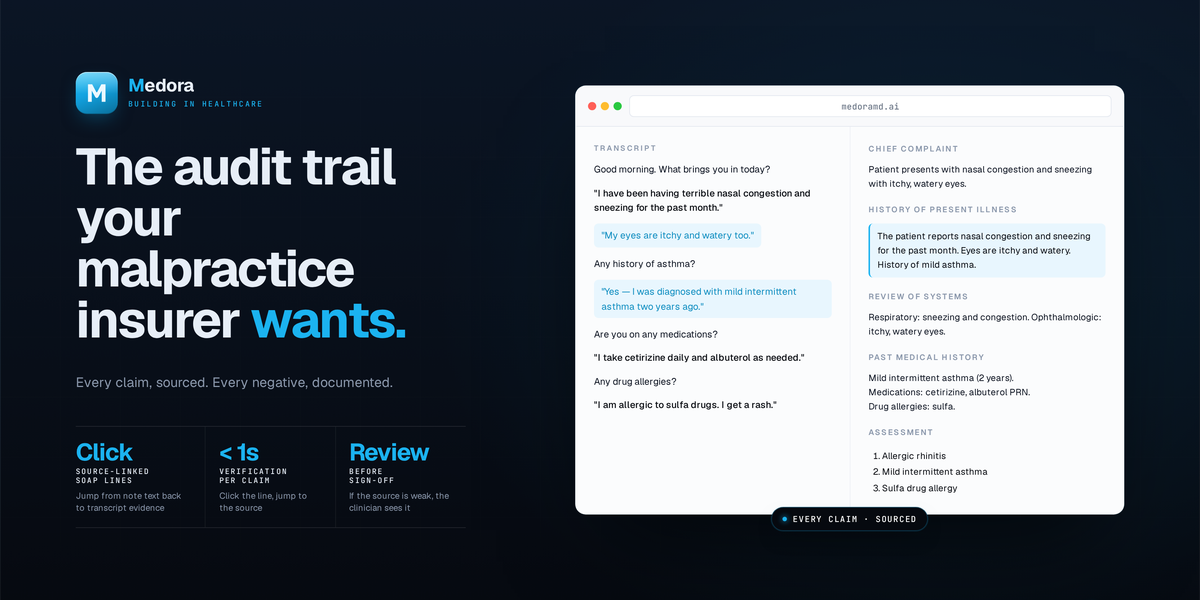
Ambient SOAP note generation represents a fundamental shift from reactive to real-time documentation. Instead of reconstructing the visit hours later, AI scribes capture the clinical encounter as it happens, structuring the conversation into proper SOAP format while you focus on patient care.
The technology works by listening to the natural clinical conversation, identifying key clinical elements, and organizing them into structured documentation. For allergy practices, this means the AI understands allergy-specific terminology—from "biphasic reaction" to "oral allergy syndrome"—and can properly categorize clinical information into assessment and plan sections.
However, AI documentation isn't perfect yet. The technology requires clinical oversight, particularly for complex cases where clinical reasoning needs explicit documentation. The goal isn't to replace clinical judgment in documentation, but to handle the mechanical aspects of SOAP note creation while preserving the clinician's cognitive energy for clinical decision-making.
The Time Recovery Opportunity
Early testing with allergy practices suggests that ambient documentation can recover significant time. Instead of spending substantial time on end-of-day charting, providers can complete their documentation review in a shorter timeframe while clinical details are still fresh.
This time recovery has cascading benefits. Providers report feeling more present during patient encounters when they're not mentally preparing for hours of documentation. The reduced cognitive load also means better work-life boundaries, with less clinical work bleeding into personal time.
Implementation Considerations
Successful implementation of AI SOAP note generation requires attention to workflow integration. The technology works best when it becomes invisible—capturing clinical conversations without disrupting the natural flow of patient care.
Key considerations include:
- Privacy and consent: Patients need clear understanding of how their conversations are being captured and processed
- Clinical review workflows: Establishing efficient processes for provider review and sign-off
- Integration with existing systems: Ensuring seamless flow from AI-generated notes into your EMR
- Staff training: Helping clinical staff understand how to work effectively with ambient documentation
The Path Forward
As AI documentation technology matures, the opportunity for allergy practices extends beyond time savings. Real-time clinical capture enables better clinical intelligence, more consistent documentation quality, and improved provider satisfaction.
The goal isn't to eliminate clinical judgment from documentation, but to eliminate the administrative burden that currently consumes provider time and energy. When SOAP note generation happens seamlessly during the visit, providers can focus on what matters most: delivering excellent allergy care.
Medora Scribe addresses this documentation challenge head-on for allergy practices. Built specifically for allergy and asthma clinics, Medora Scribe captures clinical conversations in real-time and generates structured SOAP notes with allergy-specific terminology recognition. Unlike generic AI scribes, Medora Scribe understands the nuances of allergy documentation—from skin test interpretations to immunotherapy discussions. The system integrates with your existing workflow, allowing providers to review and finalize notes while clinical details are fresh, eliminating the after-hours documentation burden that has become the hidden tax on busy allergy practices.
See MedoraScribe in your workflow
See how ambient capture, allergy-specific SOAP notes, Evidence Mapping, and
clinician review work together with a synthetic patient demonstration.