skin testing
Complete Skin Test Documentation: From Controls to Final Readings
2026-10-12 · 3 min read
The Documentation Gap That Costs Practices
A complete skin test note tells a story that begins with controls and ends with clinical interpretation. Yet many practices struggle with incomplete documentation that leaves gaps an auditor could drive through.
The elements of comprehensive skin test documentation extend far beyond simply noting "positive" or "negative" results. Each component serves a specific purpose in creating an audit-proof record that supports clinical decisions and billing.
Controls First: The Foundation
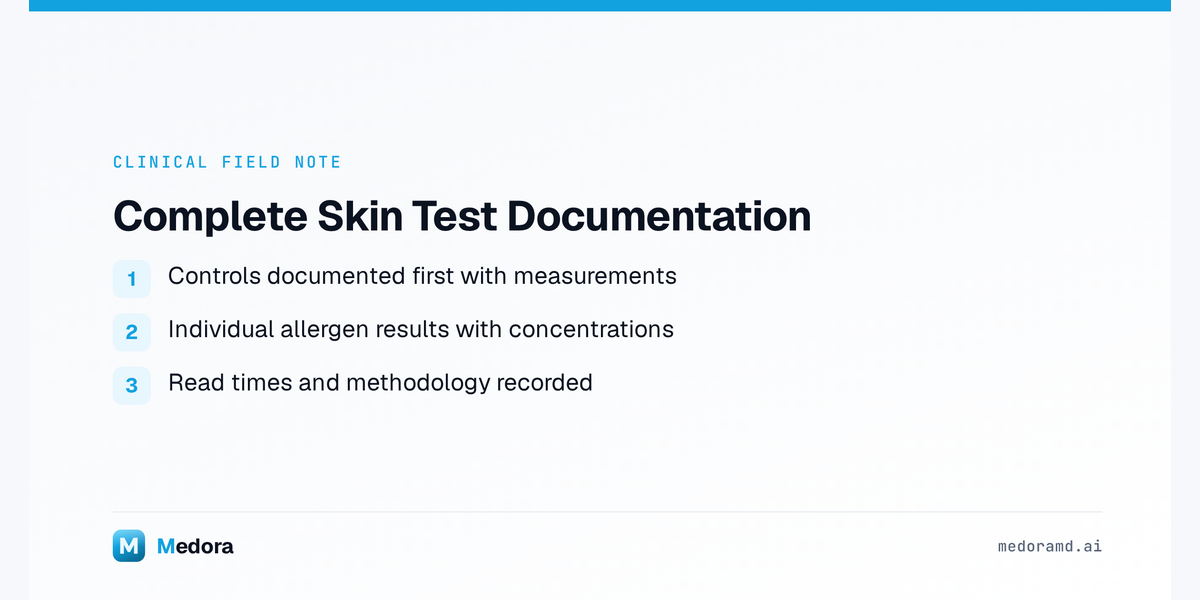
Every skin test note should begin with control results. The histamine positive control confirms the patient's ability to react, while the saline negative control rules out dermographism or heightened skin reactivity. Without documented controls, the entire test interpretation becomes questionable.
Document the wheal and flare measurements for both controls, along with the concentration used. A typical entry might read: "Histamine 1mg/mL: 4mm wheal, 12mm flare. Saline: 0mm wheal, 0mm flare."
Allergen-by-Allergen Documentation
For each tested allergen, complete documentation includes:
- Allergen name and source
- Concentration tested
- Wheal and flare measurements
- Time of reading (typically 15-20 minutes post-application)
- Any immediate reactions noted
This level of detail supports both clinical decision-making and potential appeals if payer questions arise about immunotherapy recommendations.
Methodology and Timing
Document the testing method (prick vs intradermal), device used, and exact timing of readings. Intradermal testing requires additional documentation of injection volume and any immediate wheal formation.
The read time matters more than many practices realize. Early readings may miss delayed reactions, while late readings can show false positives from irritation.
Audit Protection
Incomplete skin test documentation represents one of the most common audit findings in allergy practices. Payers increasingly scrutinize the medical necessity of immunotherapy, making detailed testing records essential for appeals.
Clinical Continuity
When patients return months later for immunotherapy adjustments, detailed baseline testing records inform dosing decisions and help identify new sensitivities.
Legal Protection
In adverse event investigations, complete documentation of testing methodology and results provides crucial legal protection for the practice.
Common Documentation Pitfalls
Many practices fall short in specific areas:
Generic Panels: Notes that simply state "environmental panel positive" without individual allergen results create audit vulnerabilities.
Missing Controls: Failing to document control results undermines the validity of all other test results.
Incomplete Measurements: Recording only positive results while omitting negative findings leaves gaps in the clinical picture.
Timing Inconsistencies: Varying read times without documentation make result interpretation difficult.
The Technology Solution
Medora addresses skin test documentation through unified patient context across all modules.
The Follow-Up Intelligence module creates briefs that link each documented point back to where it originated in the record, making it easy to trace testing decisions through to treatment plans.
Moving Forward
Complete skin test documentation requires systematic attention to detail, from the first control reading through final clinical interpretation. The investment in thorough documentation pays dividends in audit protection, clinical continuity, and patient safety.
How does your practice ensure consistency in skin test documentation across different providers and testing days?
---
Medora Scribe, built for allergy visits. Medora Copilot listens to the allergy visit and drafts an allergy-structured SOAP note, with visit templates for new patients, follow-ups, skin testing, immunotherapy and asthma. The clinician reviews, edits and signs every note. See how Medora Scribe works or start a 14-day free trial, no card needed ($99 per provider per month after the trial).