
Spring Pollen Season: How AI Documentation Streamlines Peak Volume Patient Care
# Spring Pollen Season: How AI Documentation Streamlines Peak Volume Patient Care
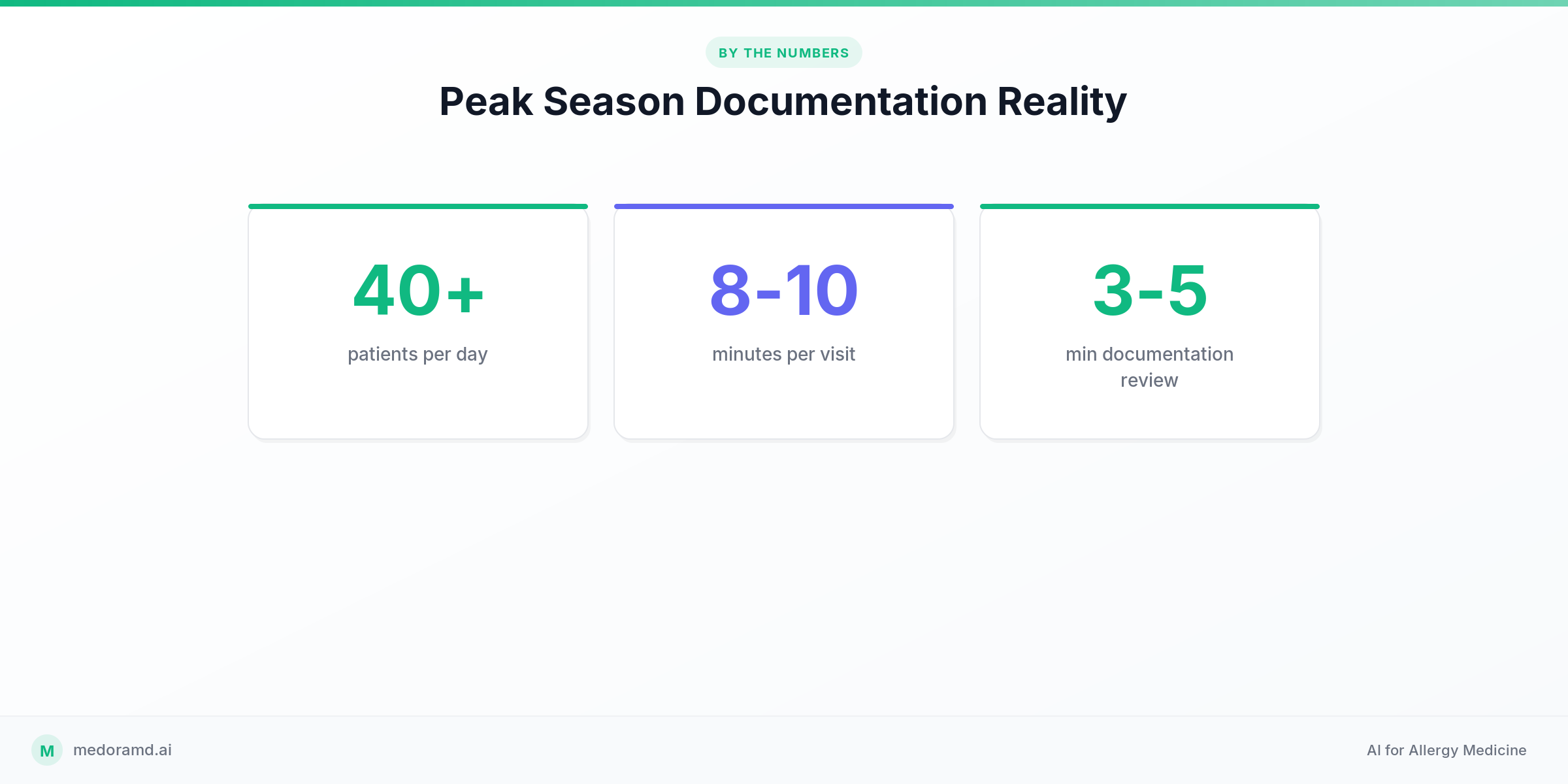
March through May transforms allergy clinics from manageable workflows into controlled chaos. What starts as 15-20 scheduled patients quickly becomes 35-40 when the tree pollen counts spike and urgent visits flood the schedule. Every allergist knows this reality: spring means volume, and volume tests every system in your practice.
The Documentation Crunch: Quality vs. Speed
During peak season, the pressure to maintain thorough documentation while seeing double your usual patient load creates an impossible equation. Each encounter still requires the same clinical rigor—detailed symptom assessment, medication reviews, physical exam findings, and treatment plans—but now compressed into shorter time slots with less mental bandwidth.
The traditional approach forces an uncomfortable trade-off. Rush through documentation and risk missing critical details that matter for follow-up care and billing accuracy. Take the time for complete notes and fall further behind, keeping patients waiting and extending your day well past clinic hours.
Where Standard EHR Templates Fall Short
Most electronic health records weren’t designed for the nuanced, high-volume nature of allergy practice during peak season. Generic templates force you to click through multiple screens for basic allergy assessments. Dropdown menus don’t capture the subtle differences between “mild intermittent rhinitis with new onset conjunctival symptoms” and “moderate persistent rhinitis with breakthrough symptoms on current therapy.”
When you’re seeing a patient every 8-10 minutes, these inefficiencies compound. The cognitive load of translating clinical observations into checkbox selections while mentally preparing for the next patient creates the perfect storm for documentation fatigue.
The Real Cost of Rushed Documentation
Beyond the immediate stress, inadequate spring season documentation creates downstream problems that persist long after pollen counts drop. Incomplete symptom severity assessments make it difficult to evaluate treatment effectiveness at follow-up visits. Missing details about trigger identification or medication adherence discussions can derail long-term management plans.
From a practice management perspective, rushed documentation often means missed billing opportunities. The difference between a straightforward follow-up and a more complex encounter with medication adjustments and patient education can be significant—but only if properly documented.
AI Documentation: Built for Volume Without Compromise
AI-powered clinical documentation addresses the spring season challenge by handling the mechanical aspects of note creation while preserving clinical nuance. Instead of fighting with templates during patient encounters, clinicians can focus entirely on the clinical conversation while AI captures and structures the relevant information.
The technology works particularly well for allergy encounters because it can distinguish between similar-sounding but clinically distinct presentations. When a patient describes “stuffy nose and watery eyes that started two weeks ago,” AI documentation can help differentiate whether this represents seasonal allergic rhinitis, viral upper respiratory symptoms, or an exacerbation of underlying allergic disease based on the full clinical context.
Maintaining Consistency Under Pressure
Perhaps most importantly for peak season workflows, AI documentation provides consistency that human fatigue can compromise. Your 8 AM patient and your 6 PM patient both deserve the same level of documentation thoroughness, but maintaining that standard manually after 10 hours of back-to-back encounters is genuinely difficult.
AI systems don’t experience decision fatigue or the gradual degradation in attention to detail that naturally occurs during high-volume days. This consistency proves especially valuable for allergy practices, where subtle changes in symptom patterns or treatment responses often guide important clinical decisions.
Real-World Implementation: What Actually Works
Early adoption among allergy practices suggests AI documentation works best when integrated into existing workflows rather than replacing them entirely. Successful implementations typically involve AI handling the structured portions of clinical notes—chief complaint organization, review of systems documentation, and treatment plan formatting—while clinicians retain control over clinical reasoning and complex decision-making elements.
The most significant time savings appear to come from post-encounter documentation tasks. Instead of spending 15-20 minutes after each patient visit organizing notes and ensuring billing accuracy, many clinicians report reducing this to 3-5 minutes of review and refinement.
Looking Beyond Peak Season
While spring pollen season creates the most obvious need for efficient documentation, the benefits extend throughout the year. Food allergy evaluations, immunotherapy monitoring, and complex medication management all benefit from consistent, thorough documentation that doesn’t add administrative burden to clinical care.
The goal isn’t to remove clinicians from the documentation process but to eliminate the friction that prevents good documentation during busy periods. When the technology works correctly, it should feel less like using a tool and more like having a highly efficient clinical assistant who never gets tired or makes transcription errors.
—
Tools like Medora’s AI Scribe are designed specifically for these high-volume clinical scenarios, generating ambient SOAP notes that capture the nuanced conversations happening during allergy encounters. Rather than forcing clinical observations into rigid templates, the system adapts to natural clinical workflows while maintaining the documentation quality that complex allergy patients require.
What strategies has your practice developed for maintaining documentation quality during peak allergy season? Have you found ways to balance thoroughness with efficiency when patient volumes surge?
See how Medora works in a real allergy clinic.
From ambient SOAP notes to AI-assisted skin prick test reading — see what Medora can do for your practice.