
Spring Pollen Season Prep: Optimizing Patient Education with AI-Generated Resources
The Generic Education Problem
Every March, allergy clinics brace for the spring pollen surge. Patients flood in with familiar complaints: “My eyes are watering, I can’t sleep, and those over-the-counter meds aren’t helping.” The standard response? Hand them a generic pollen avoidance sheet and hope for the best.
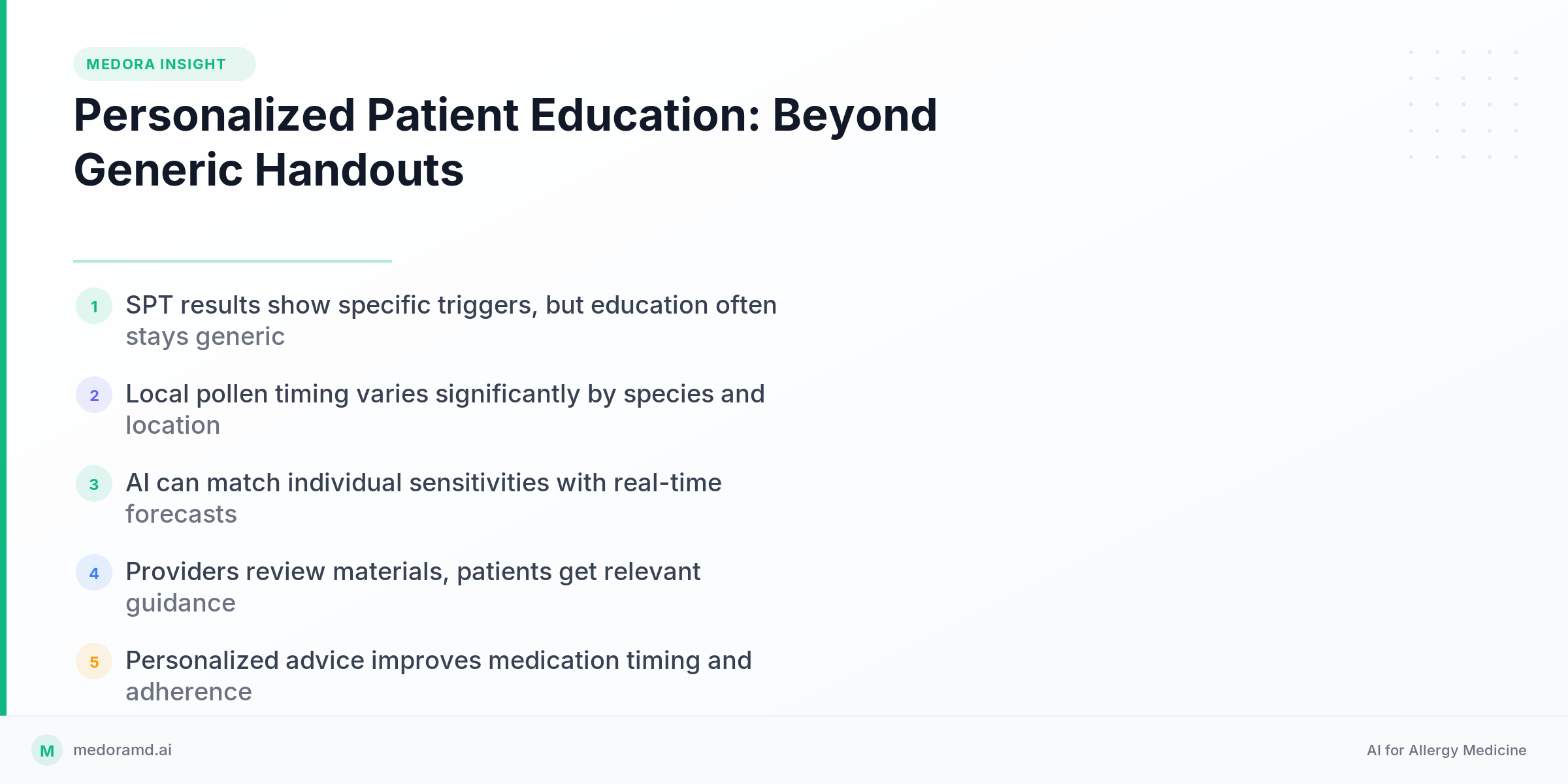
But here’s what we’ve learned from working with allergy practices: generic patient education materials often miss the mark. A patient with positive SPT results to oak and ragweed gets the same “avoid outdoor activities during high pollen days” advice as someone reactive to grass and birch. Meanwhile, local pollen forecasts show oak peaking in two weeks while grass season won’t start for another month.
The Disconnect Between Testing and Education
Skin prick testing gives us precise, individualized data about each patient’s sensitivities. We know exactly which allergens trigger their reactions and can measure the relative severity through wheal size. Yet when it comes to patient education, we often revert to one-size-fits-all handouts.
Recent research in southern Australia examining seasonal variation in allergenic grass pollen demonstrates just how location-specific and time-sensitive pollen exposure really is. Different grass species peak at different times, even within the same geographic region. A patient sensitive to Bermuda grass faces different exposure patterns than someone reactive to Timothy grass, even if they live in the same city.
This disconnect becomes particularly problematic during spring preparation visits. Patients leave our offices with generic advice that may not align with their specific sensitivities or local pollen patterns. The result? Preventive measures that feel irrelevant and medication timing that doesn’t match their actual exposure risk.
Personalizing Education at Scale
What if patient education could be as precise as our diagnostic testing? Imagine generating personalized guidance that combines individual SPT results with real-time local pollen forecasts. Instead of generic avoidance strategies, patients receive specific recommendations based on their unique sensitivity profile and current environmental conditions.
For a patient with 4+ wheals to oak and birch but minimal grass reactivity, their March education packet would emphasize tree pollen precautions, optimal medication timing for the upcoming oak season, and reassurance that their grass-sensitive friends’ symptoms aren’t necessarily predictive of their own experience.
This approach transforms patient education from generic advice into actionable intelligence. Patients understand not just what to avoid, but when to be most vigilant and how to time their preventive medications.
The Clinical Workflow Challenge
The barrier isn’t clinical knowledge—allergists understand the importance of personalized care. The challenge is workflow efficiency. Manually customizing patient education materials for each individual’s SPT results and local pollen conditions simply isn’t feasible during busy clinic days.
Evidence from pediatric allergic rhinitis treatment studies emphasizes the importance of individualized approaches, particularly when managing multiple environmental triggers. Yet the administrative burden of creating personalized materials often prevents this level of customization in real-world practice.
What’s needed is a system that can rapidly generate personalized patient education materials without adding to provider workload. The technology should integrate SPT results with local environmental data to produce relevant, timely guidance that patients can actually use.
Making Personalized Education Practical
Effective personalized patient education requires several key components:
Specificity Over Generality: Rather than “avoid pollen,” patients need guidance like “oak pollen typically peaks in your area during the third week of March—start your nasal steroid now for optimal prevention.”
Timing Relevance: Education materials should reflect current and upcoming pollen conditions, not generic seasonal advice that may not match local patterns.
Individual Risk Stratification: Patients with severe SPT reactions need more aggressive preventive strategies than those with minimal wheals.
Actionable Instructions: Clear medication timing, specific avoidance measures, and realistic expectations based on their sensitivity profile.
The AI-Assisted Approach
Artificial intelligence tools can bridge the gap between individualized testing results and personalized patient education. By integrating SPT data with local pollen forecasts and evidence-based treatment guidelines, AI can generate customized patient materials that would be impractical to create manually.
This isn’t about replacing clinical judgment—it’s about scaling personalized care. Providers review and approve all patient materials, but the initial generation happens automatically based on documented SPT results and current environmental conditions.
Early feedback from allergists using AI-generated patient education suggests meaningful improvements in patient understanding and medication adherence. Patients report feeling like their specific situation was considered, rather than receiving generic advice that may not apply to their sensitivities.
Looking Ahead: Smarter Patient Preparation
As we prepare for another spring pollen season, the opportunity to enhance patient education through personalized, data-driven materials becomes increasingly clear. The combination of precise diagnostic testing and intelligent content generation offers a path toward more effective patient preparation without increasing provider workload.
The goal isn’t perfect prediction—pollen seasons vary and individual responses differ. Rather, it’s about giving patients guidance that feels relevant to their specific situation and local conditions. When education materials reflect their actual SPT results and current pollen forecasts, patients are more likely to follow through with preventive measures.
Tools like Medora’s AI-powered patient instruction generation can help bridge this gap by automatically creating personalized education materials based on documented SPT results and local pollen data. The system generates customized guidance that providers can review and modify as needed, making individualized patient education practical during busy clinic workflows. This represents the kind of assistive technology that enhances clinical care without replacing provider expertise—supporting the personalized approach that leads to better patient outcomes.
What challenges have you encountered when trying to provide personalized pollen season guidance to patients with multiple environmental sensitivities?
See how Medora works in a real allergy clinic.
From ambient SOAP notes to AI-assisted skin prick test reading — see what Medora can do for your practice.