
Spring Pollen Season Documentation: How AI-Assisted Notes Capture Complex Exposure-Symptom Patterns
The Changing Face of Spring Pollen Season
Spring used to be predictable. Tree pollen peaked in March, grass followed in May, and by June most allergists had a clear picture of their patients’ seasonal patterns. But climate change has scrambled this timeline, creating overlapping seasons and extended exposure periods that challenge traditional documentation approaches.
Recent research examining seasonal variation in allergenic grass pollen in southern Australia reveals how complex these patterns have become. What we’re seeing isn’t just earlier starts or later endings—it’s fundamental changes in peak timing, intensity, and species composition that require more nuanced tracking than our standard documentation typically captures.
The Documentation Challenge: Beyond “Spring Allergies”
In a busy allergy clinic, documenting seasonal symptoms often gets reduced to shorthand: “spring allergies flaring,” “typical tree pollen symptoms,” or “seasonal rhinitis.” But these broad strokes miss the granular details that drive treatment decisions.
Consider this scenario: A patient reports worsening symptoms in late April. Is this late tree pollen exposure extending their birch season? Early grass pollen from the unusually warm March? Or cross-reactivity between their known tree allergies and emerging grass exposure? The answer changes whether you adjust their current antihistamine, start early grass season prep, or modify their immunotherapy schedule.
Traditional documentation struggles to capture these nuances consistently. In the 8-12 minutes of a follow-up visit, providers focus on immediate symptom management, often missing the exposure timing details that inform longer-term treatment optimization.
What AI Documentation Captures That We Often Miss
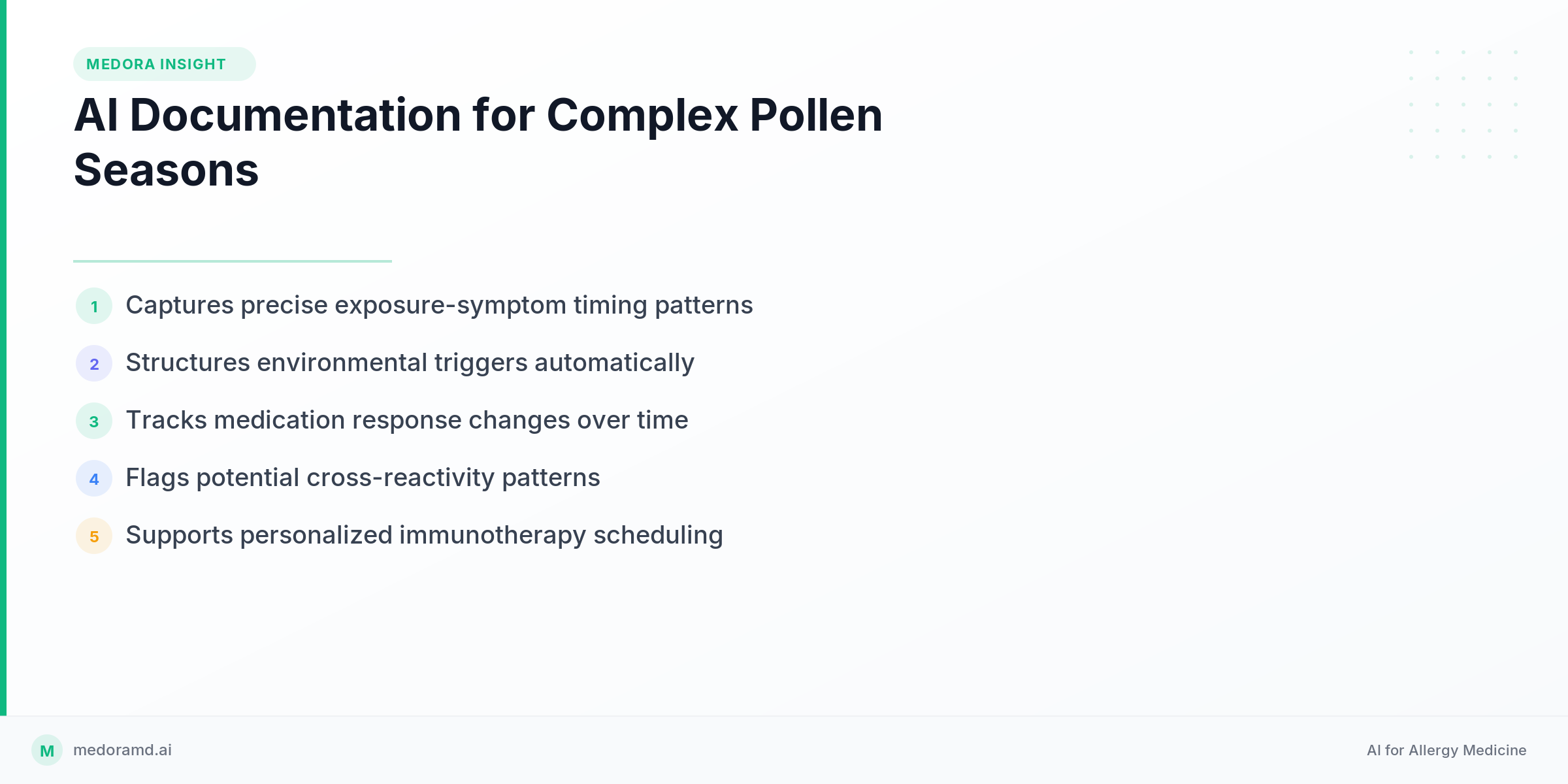
AI-assisted clinical documentation excels at capturing and structuring the contextual details that busy providers might abbreviate or skip. During a natural conversation with a patient, several key data points emerge that are crucial for allergy management:
Temporal Pattern Recognition
When a patient mentions “symptoms started getting worse about two weeks ago,” AI documentation can timestamp this against local pollen counts and weather patterns. It captures not just current severity, but the trajectory of symptom changes that indicate which allergens are driving the reaction.
Environmental Context Integration
Patients often provide rich environmental context: “It was really windy last Tuesday,” or “symptoms are worse when I work in the garden versus just walking outside.” These details help differentiate between different pollen exposures and guide specific avoidance strategies.
Medication Response Patterns
AI documentation can track statements like “the Claritin worked fine until last week” or “I needed my rescue inhaler twice after being outside yesterday.” These patterns help identify when current treatment protocols need adjustment and inform immunotherapy timing decisions.
Cross-Reactivity Clues
When patients mention food reactions alongside respiratory symptoms—”my mouth gets itchy when I eat apples during tree season”—AI documentation can flag potential oral allergy syndrome patterns that warrant further evaluation.
The Clinical Impact: Better Data, Better Decisions
More detailed seasonal documentation supports several key clinical workflows:
Immunotherapy Optimization: Precise exposure-symptom timing helps determine optimal injection schedules and identifies when patients might benefit from extended or modified protocols.
Medication Timing: Understanding individual pollen sensitivity patterns allows for more targeted pre-seasonal medication starts rather than broad “start in March” recommendations.
Patient Education: Detailed exposure patterns enable specific avoidance counseling—not just “stay inside during high pollen days” but “your symptoms spike with morning outdoor activity during oak season.”
Treatment Efficacy Tracking: Consistent documentation of symptom patterns year-over-year helps identify treatment success and guides protocol adjustments.
Working with Climate-Changed Pollen Seasons
Emerging research suggests that climate change isn’t just shifting pollen seasons—it’s making them more variable and less predictable year-to-year. This variability makes pattern recognition more important, not less. When traditional seasonal timing becomes unreliable, detailed symptom-exposure documentation becomes the foundation for personalized treatment approaches.
Preliminary findings indicate that patients may need more flexible treatment protocols that respond to actual exposure patterns rather than calendar-based seasonal predictions. This requires documentation systems that can capture and analyze individual exposure-response relationships over time.
Practical Implementation Considerations
While AI-assisted documentation shows promise for capturing seasonal allergy patterns, implementation requires consideration of clinic workflow and provider preferences. Some allergists prefer structured templates that prompt for specific seasonal details, while others find ambient documentation of natural patient conversations more comprehensive.
The key is ensuring that whatever system is used consistently captures the temporal, environmental, and response pattern details that inform treatment decisions. This might mean training staff to ask specific follow-up questions about timing and triggers, or implementing documentation tools that automatically structure seasonal symptom information.
Clinics implementing AI documentation for seasonal allergies report that the initial learning curve is offset by more consistent capture of clinically relevant details and reduced time spent on manual note structuring.
Supporting Enhanced Seasonal Documentation
AI tools like Medora are designed to support this type of detailed seasonal pattern documentation through ambient SOAP note generation that captures the natural flow of patient conversations. Rather than requiring providers to remember specific prompts or complete additional templates, the AI listens for and structures the temporal and environmental details that patients naturally provide during visits. This approach helps ensure that the granular information needed for optimal seasonal allergy management is consistently documented without adding to provider workload.
What patterns do you find most challenging to document consistently during busy spring pollen seasons? Are there specific seasonal details that you wish were captured more reliably in your clinic notes?
See how Medora works in a real allergy clinic.
From ambient SOAP notes to AI-assisted skin prick test reading — see what Medora can do for your practice.