
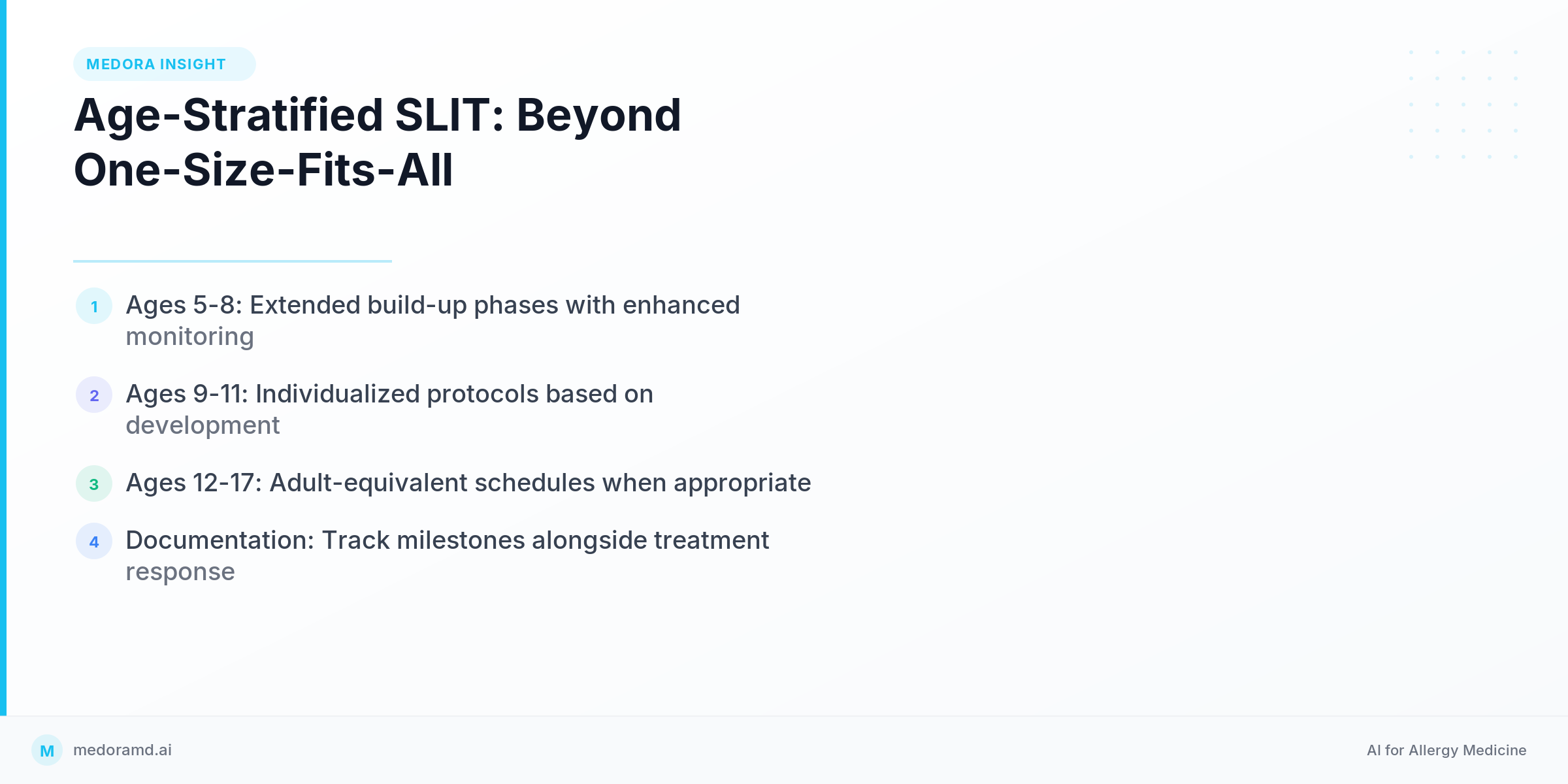
Age-Specific SLIT Protocols: Why One Size Doesn’t Fit All in Pediatric Immunotherapy
The Challenge of Pediatric SLIT Protocols
When 8-year-old Emma walked into my clinic with persistent allergic rhinitis symptoms despite standard treatment, her mother asked the question I hear weekly: “Is she too young for immunotherapy?” The answer isn’t as straightforward as our current protocols suggest.
Traditionally, we’ve applied adult SLIT dosing schedules to pediatric patients with minimal age-specific modifications. But emerging research in Pediatric Research suggests this one-size-fits-all approach may be leaving therapeutic potential on the table. Age-stratified evaluation of sublingual immunotherapy outcomes reveals meaningful differences in treatment response across pediatric age groups that warrant consideration in our clinical protocols.
What the Research Tells Us
Recent studies examining house dust mite sublingual immunotherapy tablets in pediatric populations point to distinct response patterns based on developmental stages. According to research published in Pediatric Allergy and Immunology, children in different age cohorts showed varying efficacy profiles when treated with standardized 300 IR protocols.
The preliminary findings indicate that younger children (ages 5-8) may benefit from modified initiation schedules, while adolescents (12-17) often tolerate accelerated protocols similar to adult regimens. Middle childhood patients (ages 9-11) appear to represent a unique cohort requiring individualized approaches.
Age-Stratified Protocol Considerations
Early Childhood (5-8 years)
In this age group, we’re seeing emerging evidence for:
– Extended build-up phases with smaller incremental increases
– Enhanced monitoring for local reactions during the first month
– Modified dosing schedules that account for inconsistent medication adherence
– Parent-supervised administration protocols with clear emergency action plans
Middle Childhood (9-11 years)
This transitional age group may warrant consideration of:
– Standard build-up schedules with increased monitoring touchpoints
– Age-appropriate education materials for shared medication responsibility
– Symptom tracking tools that engage both child and parent
– Flexible dosing windows to accommodate school schedules
Adolescence (12-17 years)
Preliminary data suggests adolescents often respond well to:
– Adult-equivalent protocols with appropriate weight-based modifications
– Independent medication management with periodic check-ins
– Digital tracking tools that integrate with their technology preferences
– Accelerated schedules when clinically appropriate
Implementation Challenges in Real Practice
While the research is promising, implementing age-stratified protocols creates practical challenges. Tracking developmental milestones alongside treatment response requires more granular documentation than our current workflows typically support. We need systems that can flag age-specific monitoring requirements, adjust dosing reminders based on developmental stage, and maintain detailed adherence tracking across different family dynamics.
The cognitive load of remembering which 10-year-old is ready for standard dosing versus extended monitoring, while simultaneously managing their 6-year-old sibling’s modified protocol, adds complexity to already demanding clinical schedules.
Clinical Scenario: Making It Work
Consider two patients starting house dust mite SLIT on the same day: Marcus (age 7) and Sofia (age 14). Traditional protocols would place both on identical schedules. Age-stratified approaches might suggest Marcus begins with a more gradual build-up and twice-weekly check-ins during month one, while Sofia follows an accelerated schedule with standard monitoring intervals.
Documenting these different approaches, tracking their distinct milestone requirements, and ensuring appropriate follow-up scheduling requires systematic clinical support that goes beyond simple calendar reminders.
The Documentation Reality
Implementing individualized pediatric protocols means capturing more nuanced clinical data. We need to document not just “patient tolerating SLIT well” but age-specific observations: “9-year-old demonstrating improved medication independence, ready to transition from twice-daily parent supervision to morning-only oversight.”
This level of detail, while clinically valuable, adds documentation burden during already-compressed encounter times.
Supporting Age-Stratified Care
As we move toward more personalized pediatric immunotherapy protocols, clinical tools that can assist with age-appropriate documentation become increasingly valuable. AI-powered systems like Medora can help streamline the documentation of developmental milestones and treatment modifications, generating structured notes that capture age-specific observations without adding manual documentation burden. The platform’s ambient SOAP note generation can help ensure that nuanced pediatric considerations are consistently documented, while AllergenIQ provides age-appropriate patient instruction materials that align with developmental capabilities.
What challenges have you encountered when implementing individualized treatment protocols for pediatric patients across different age groups?
See how Medora works in a real allergy clinic.
From ambient SOAP notes to AI-assisted skin prick test reading — see what Medora can do for your practice.