
AI Scribe Technology Transforms Allergy Documentation: From Manual Notes to Intelligent Clinical Summaries
# AI Scribe Technology Transforms Allergy Documentation: From Manual Notes to Intelligent Clinical Summaries
How artificial intelligence is reducing administrative burden while improving clinical accuracy in allergy practice
Dr. Sarah Chen finishes explaining a complex immunotherapy protocol to her patient with multiple environmental allergies. As the patient leaves, she realizes she still needs to document the 25-minute encounter, update the treatment plan, and prepare notes for the next visit. It’s 4:30 PM, she has three more patients, and her documentation is already behind.
This scenario plays out in allergy clinics nationwide. While allergists excel at diagnosing and treating complex immunologic conditions, the administrative burden of documentation continues to grow, pulling focus away from patient care and contributing to physician burnout.
The Documentation Challenge in Allergy Practice
Allergy and immunology encounters are inherently complex. A typical visit might include detailed environmental exposure histories, food allergy assessments, skin prick test results, immunotherapy adjustments, and patient education about avoidance strategies. Each element requires careful documentation for clinical continuity, billing accuracy, and medicolegal protection.
Traditional documentation methods—whether handwritten notes, template-based EHR entries, or dictation—create several challenges:
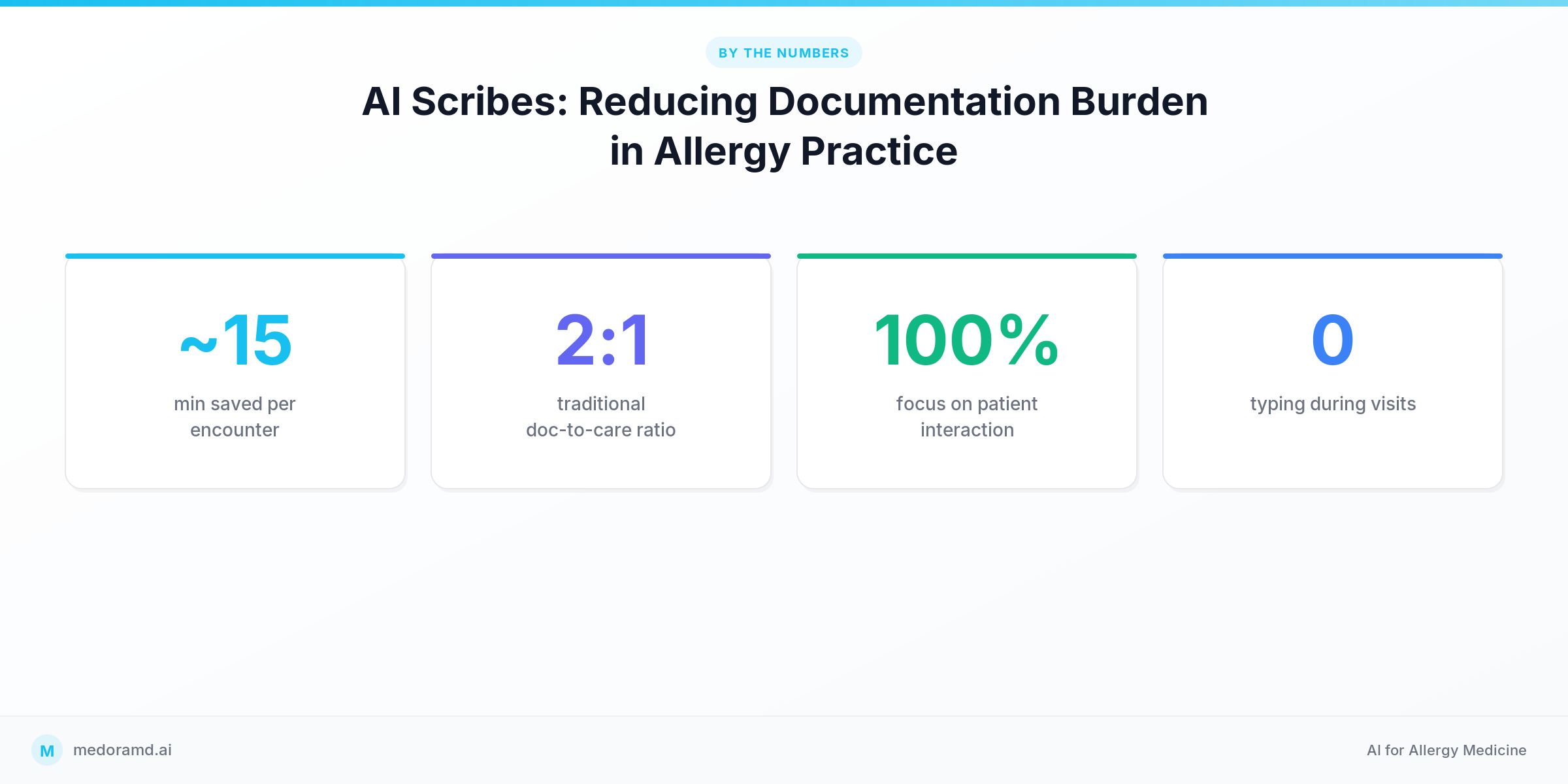
Time Burden: Studies suggest physicians spend nearly two hours on documentation for every hour of patient care. In allergy practice, where visits often involve extensive histories and multiple procedures, this ratio can be even higher.
Cognitive Load: Switching between patient interaction and note-taking fragments attention. When allergists focus on typing or dictating, they’re not fully present for patient concerns or subtle clinical observations.
Inconsistency: Manual documentation varies in completeness and structure, potentially missing key details that matter for future visits or specialist communication.
Enter AI Scribe Technology
Artificial intelligence scribe technology represents a meaningful shift in clinical documentation. Rather than requiring physicians to actively document during or after encounters, AI scribes listen to patient conversations and automatically generate structured clinical notes.
For allergy practice specifically, this technology addresses several unique documentation needs:
Capturing Complex Histories
Allergy patients often present with intricate symptom patterns, multiple triggers, and detailed exposure timelines. AI scribes can process these complex narratives and organize them into structured formats that highlight key clinical decision points.
A patient describing seasonal symptoms might mention “worse in spring, especially after being outside, but also sometimes in the house when windows are open, and definitely worse this year than last.” An AI scribe can extract the relevant temporal patterns, exposure relationships, and symptom progression that inform diagnostic thinking.
Procedure Documentation
Skin prick tests, intradermal testing, and immunotherapy administration require precise documentation of techniques, results, and patient responses. AI scribes can capture these procedural details in real-time, ensuring nothing is missed while the allergist focuses on proper technique and patient safety.
Patient Education Integration
Allergy management relies heavily on patient education—explaining avoidance strategies, proper medication use, and emergency action plans. AI scribes can document these educational interventions, creating a record of what was discussed and what follow-up education might be needed.
Clinical Benefits Beyond Time Savings
While reducing documentation time is valuable, AI scribe technology offers additional clinical advantages:
Enhanced Patient Interaction: When allergists aren’t focused on note-taking, they can maintain better eye contact, pick up on non-verbal cues, and engage more naturally in clinical conversations. This is particularly important in allergy practice, where patient-reported symptoms and triggers are often the primary diagnostic information.
Improved Accuracy: AI scribes don’t suffer from fatigue or distraction. They consistently capture details that might be missed during busy clinic sessions, potentially identifying patterns or concerns that inform clinical decision-making.
Structured Clinical Thinking: Well-designed AI scribes can organize information in ways that support clinical reasoning, highlighting key symptoms, test results, and treatment responses in formats that facilitate pattern recognition.
Implementation Considerations
Emerging research suggests that successful AI scribe implementation requires attention to several factors:
Integration with Existing Workflows: The most effective AI scribes work within established clinical patterns rather than requiring new procedures. They should enhance current documentation practices, not completely replace them.
Accuracy and Review Processes: While AI technology continues to improve, clinical oversight remains essential. Allergists need efficient ways to review and refine AI-generated notes to ensure accuracy and completeness.
Specialty-Specific Understanding: Allergy practice involves specialized terminology, procedures, and clinical concepts. AI scribes designed for general medicine may miss nuances important to immunologic conditions.
The Future of Allergy Documentation
As artificial intelligence continues to advance, we can expect AI scribe technology to become more sophisticated in understanding clinical context and generating insights. Future developments might include automated pattern recognition across patient visits, integration with diagnostic testing systems, and intelligent suggestions for follow-up care.
However, the goal isn’t to replace clinical judgment but to support it. The most promising AI scribe implementations enhance physician capabilities while preserving the human elements of medical care that patients value.
Preliminary findings from early adopters suggest that AI scribe technology can meaningfully reduce documentation burden while maintaining or improving note quality. As this technology matures, it may become an essential tool for sustainable allergy practice.
Supporting Modern Allergy Practice
AI tools like Medora are designed specifically to support allergy workflows, offering ambient SOAP note generation that understands the unique documentation needs of immunology practice. By handling routine documentation tasks, these systems allow allergists to focus their expertise where it matters most—on complex clinical reasoning and patient care.
From skin test measurements to patient education, AI assistance can streamline administrative tasks while preserving the clinical judgment that defines excellent allergy care. The goal isn’t to replace the allergist’s expertise but to reduce the cognitive load of documentation so that expertise can be fully applied to patient care.
What documentation challenges do you find most disruptive to patient interaction in your allergy practice?
See how Medora works in a real allergy clinic.
From ambient SOAP notes to AI-assisted skin prick test reading — see what Medora can do for your practice.