
AI-Powered Clinical Decision Support: Transforming Allergy Diagnosis and Monitoring
Dr. Martinez reviews the skin prick test results from her morning patients. The 8mm wheal on Patient A’s birch allergen test catches her attention—but is it 8mm or closer to 9mm? The lighting in Room 2 makes precise measurement challenging, and she knows that 1mm can influence treatment decisions for this patient with seasonal rhinitis.
Meanwhile, her colleague down the hall struggles with documentation. Each patient encounter generates detailed notes about symptom patterns, environmental triggers, and treatment responses. By lunch, he’s already 45 minutes behind schedule, and the afternoon’s oral food challenges haven’t even started.
These scenarios illustrate a fundamental challenge in modern allergy practice: we have more diagnostic tools and treatment options than ever before, yet the cognitive load of integrating this information into clinical decisions continues to grow.
The Promise of AI-Enhanced Clinical Intelligence
Artificial intelligence in allergy medicine isn’t about replacing clinical judgment—it’s about augmenting the decision-making process with intelligent insights that help allergists focus on what they do best: caring for patients.
Emerging research in clinical AI suggests several key areas where intelligent systems can meaningfully support allergy practice:
Enhanced Diagnostic Precision
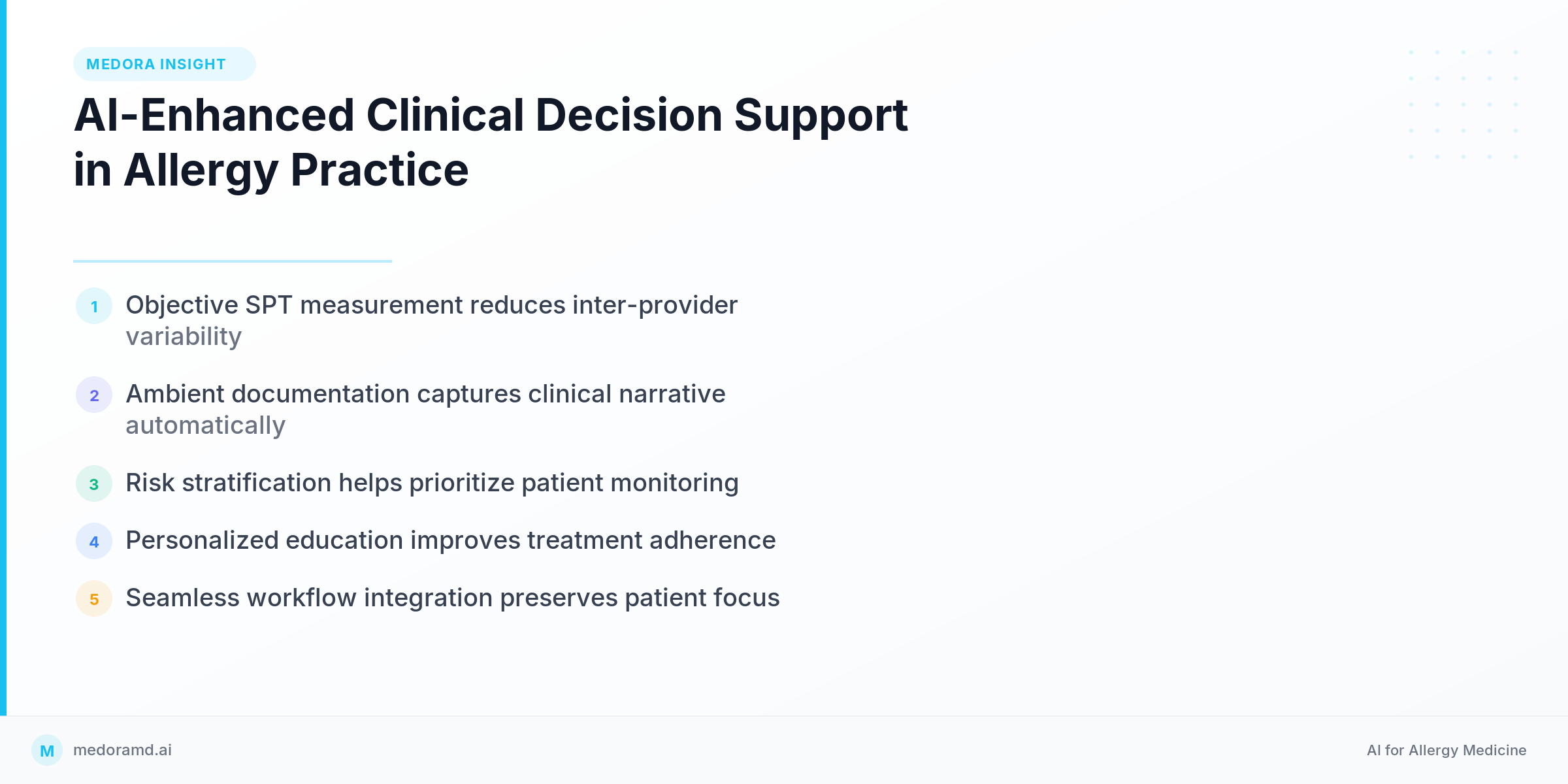
Skin prick testing remains the cornerstone of allergy diagnosis, but measurement variability between providers can impact clinical decisions. AI-assisted measurement tools are beginning to address this challenge by providing consistent, objective wheal size analysis from standardized photographs.
In our early testing with partner clinics, we’ve observed that photo-based measurement systems help reduce inter-observer variability while maintaining the speed clinicians need during busy testing sessions. The technology doesn’t interpret results—that remains the allergist’s domain—but it provides more reliable raw measurements to inform clinical judgment.
Intelligent Documentation Support
Clinical documentation in allergy practice involves capturing complex symptom patterns, environmental exposures, and treatment responses. Traditional EHR templates often fall short of capturing the nuanced information allergists need for longitudinal care.
Ambient AI documentation systems are beginning to address this gap by generating structured clinical notes from natural patient-provider conversations. Rather than forcing providers to navigate complex dropdown menus, these systems capture the clinical narrative and translate it into organized SOAP notes.
What we’ve learned from our partner clinic is that AI documentation isn’t perfect yet—it requires physician review and editing. But it meaningfully reduces the cognitive load of note creation, allowing providers to focus more attention on patient interaction during encounters.
Risk Stratification and Monitoring
Allergy patients often present with complex, evolving clinical pictures. A patient’s response to environmental allergen exposure can vary seasonally, and treatment effectiveness may change over time. AI systems are beginning to help identify patterns in these complex datasets.
Preliminary research suggests that machine learning algorithms can help identify patients at higher risk for severe reactions or treatment non-response by analyzing patterns in symptom reports, medication usage, and environmental exposure data. These insights don’t replace clinical assessment but can help allergists prioritize follow-up care and monitoring.
Personalized Patient Education
Effective allergy management depends heavily on patient understanding and adherence to avoidance measures and treatment plans. AI-powered systems are beginning to generate personalized patient education materials based on individual allergen profiles and treatment plans.
For example, a patient with birch pollen allergy and oral allergy syndrome might receive customized guidance about cross-reactive foods and seasonal medication timing, rather than generic allergy education handouts.
Current Limitations and Considerations
While the potential for AI in allergy medicine is significant, current limitations deserve honest acknowledgment:
Data Quality Dependencies: AI systems are only as reliable as the data they’re trained on. Inconsistent documentation practices or biased datasets can lead to unreliable insights.
Integration Challenges: Most AI tools still require workflow modifications that can initially slow down rather than speed up clinical processes.
Validation Needs: Many AI applications in allergy medicine are still in early development stages and require more rigorous clinical validation before widespread adoption.
The Path Forward
The most promising AI applications in allergy medicine are those that seamlessly integrate into existing clinical workflows while enhancing rather than replacing physician decision-making. Success depends on tools that:
– Reduce documentation burden without sacrificing clinical detail
– Provide objective measurements while preserving clinical interpretation
– Generate actionable insights without overwhelming providers with data
– Maintain the patient-provider relationship at the center of care
As these technologies mature, the goal isn’t to automate clinical decisions but to give allergists better tools for the complex diagnostic and therapeutic challenges they face daily.
At Medora, we’re working alongside practicing allergists to develop AI tools that genuinely support clinical workflow. Our SPT measurement system helps with objective wheal sizing, while our ambient documentation captures the clinical narrative without disrupting patient conversations. We’re still learning what works and what doesn’t, but the early feedback from our partner clinics suggests that thoughtfully designed AI can meaningfully reduce administrative burden while supporting better patient care.
What’s been your experience with measurement consistency in skin prick testing? Have you noticed variability between providers in your clinic, and how do you currently address it?
See how Medora works in a real allergy clinic.
From ambient SOAP notes to AI-assisted skin prick test reading — see what Medora can do for your practice.